Click here for a PDF of this information
Leadership
in Energy and Environmental Design:
Leadership in Energy and Environmental Design (LEED®) is the green building rating system developed by the United States Green Building Council (USGBC). The intent is to provide a standard certification process that registers buildings constructed with environmental performance, efficiency, and occupant health and well-being as primary goals. Buildings receive points towards varying levels of certification based on the set of categories established by the USGBC.
GreenGrid® Green
Roof System:
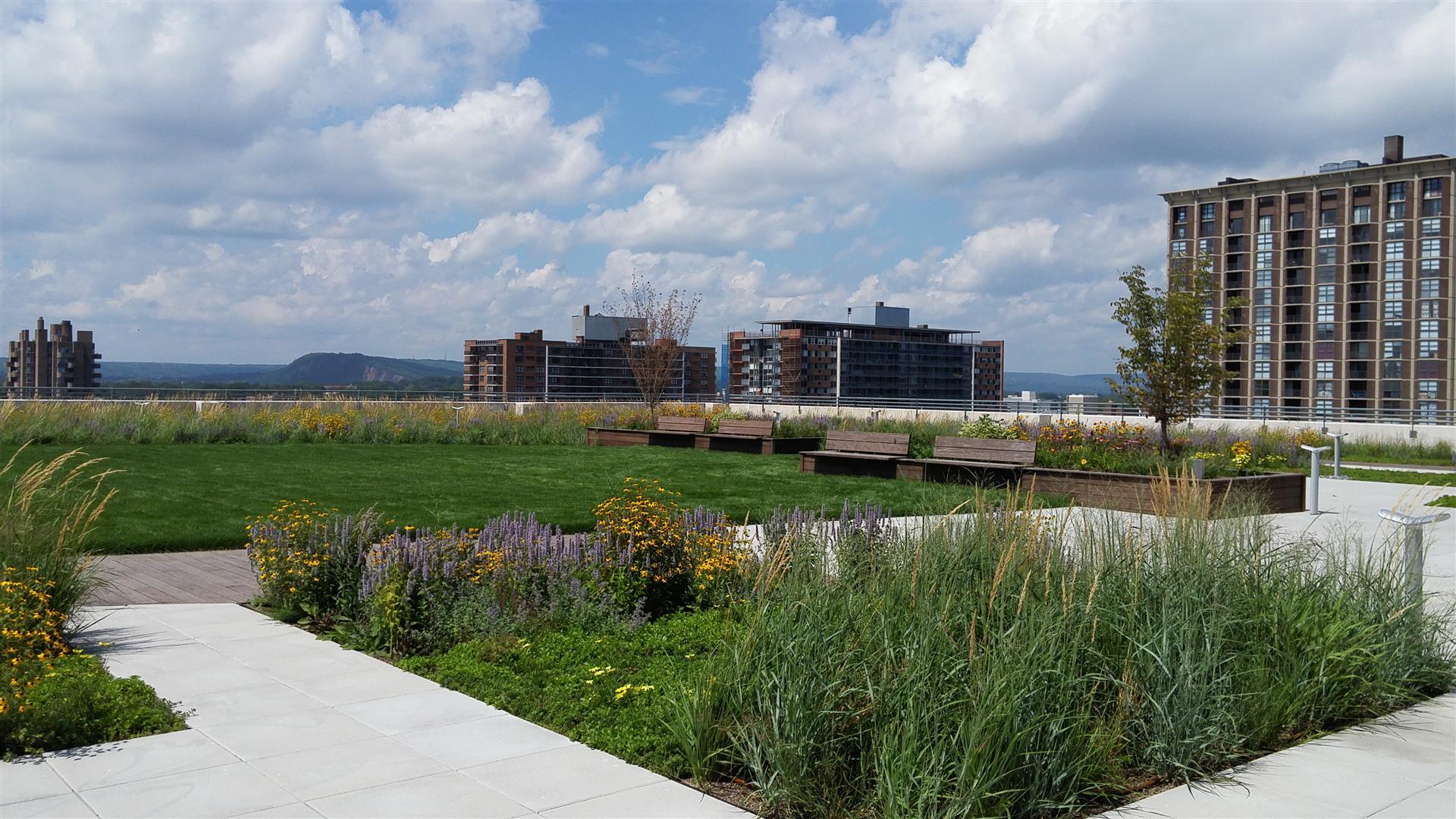
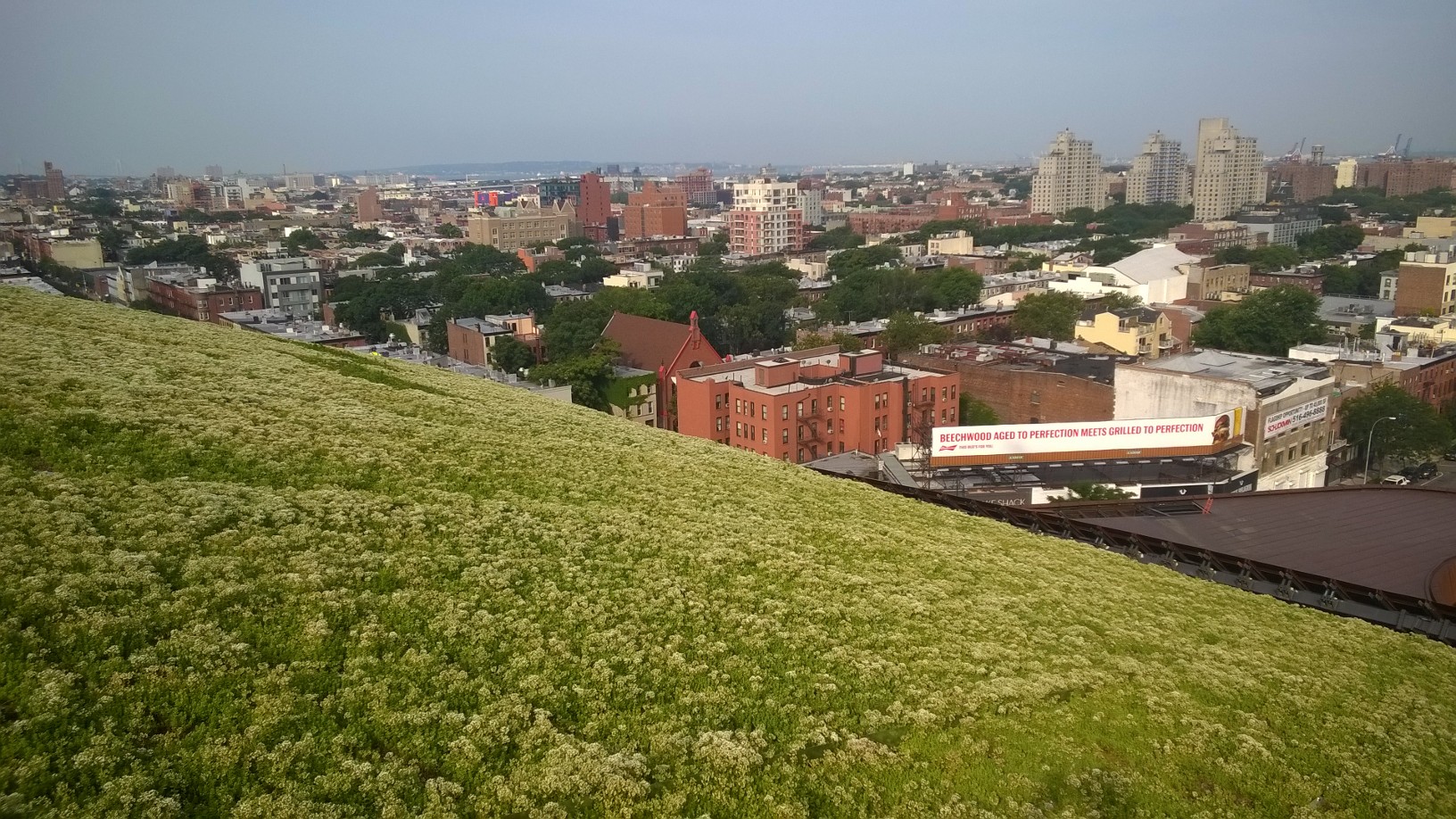
The GreenGrid® green roof system is an innovative, modular approach to green roof technology. Green roofs have a number of benefits that have been proven for years in Europe and more recently in North America. For example, the National Research Council Canada found that in buildings less than three stories in height, a green roof can reduce average daily energy demands for cooling by 50% or more compared to a typical flat roof. As a result, reductions in the size of mechanical equipment, such as, air conditioning equipment are possible. Additionally, stormwater runoff can be reduced by up to 95% following a 1-inch rain event, lowering the impact of a building on the municipal storm drainage system and the surrounding watershed. The GreenGrid® system’s modular design allows for a lighter green roof, faster installation (increasing cost effectiveness), and easier post-installation repairs (or changes) to roofs compared to traditional built-in-place green roof systems. The modules are made from a minimum of 60% post-industrial recycled plastic (HDPE), some edge treatment options are made from recycled metals or plastic and sawdust, and pavers are made from 100% post-industrial recycled rubber.
GreenGrid® and
Leed Certification Points:
A GreenGrid® green roof can help contribute towards a building’s LEED certification in a number of different categories. Although any green roof may assist with certification in some areas, specific features of the GreenGrid® system can further enhance the rating in some categories that would not apply to a traditional green roof. The major categories of the USGBC rating system and potential points achievable with a GreenGrid® green roof include the following:
Sustainable Sites
Stormwater Design: Quantity Control – SS Credit 6.1 – A GreenGrid® roof can prevent a post-development stormwater discharge peak rate associated with the building’s footprint from exceeding that of pre-development and reduce stormwater discharge by more than 25% (rate and quantity). Green roofs may also be considered as stormwater treatment through their ability to remove suspended solids and other pollutants. Potential Points: 1 point
Heat Island Effect: Roof – SS Credit 7.2 – A GreenGrid® roof can reduce roof temperatures from summertime highs of 150°F to less than 80°F. The USGBC specifies green roofs as a way to meet this objective, when the green roof installation covers at least 50% of the roof surface. Potential Points: 1 point
Water Efficiency
Water Efficient Landscaping – WE Credit 1.1 – GreenGrid® roofs can be designed so that irrigation is not required. Drought-resistant plants can be selected or greywater systems can be directed onto the roof to irrigate. As an added benefit, runoff from the green roof is filtered by the vegetation and soil media, so this water can be used to irrigate other landscaping features without pretreatment. Potential Points: 1 to 2 points
Energy and Atmosphere
Optimize Energy Performance – EA Credit 1 – Green roofs have been documented to reduce energy demand by more than 50% annually in certain types of structures. Reduced demand and increased efficiency may also lead to smaller cooling systems and lower capital costs. Potential Points: 1 to 8 points, depending on total energy reduction as a percent versus conventional buildings of the same size.
Materials and
Resources
Recycled Content – MR Credit 4.1 – The GreenGrid® modules, pavers, and some edge treatment options are made from recycled materials and can be applied toward the goal of 5% to 10% of the total value of project materials originating from recycled material. Potential Points: 1 to 2 points, depending on the overall percent of recycled project materials included in the project.
Regional Materials – MR Credit 5.1 – GreenGrid® systems are assembled and pre-planted prior to installation at local nurseries thus the system can contribute toward having 20% to 50% of a building’s materials manufactured within a 500-mile radius. Since plants and media are obtained at local nurseries, the GreenGrid® can contribute to the 50% extracted regionally credit. Potential Points: 1 to 2 points
Innovation and Design
Process
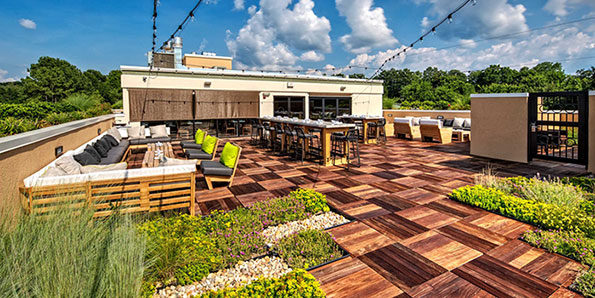
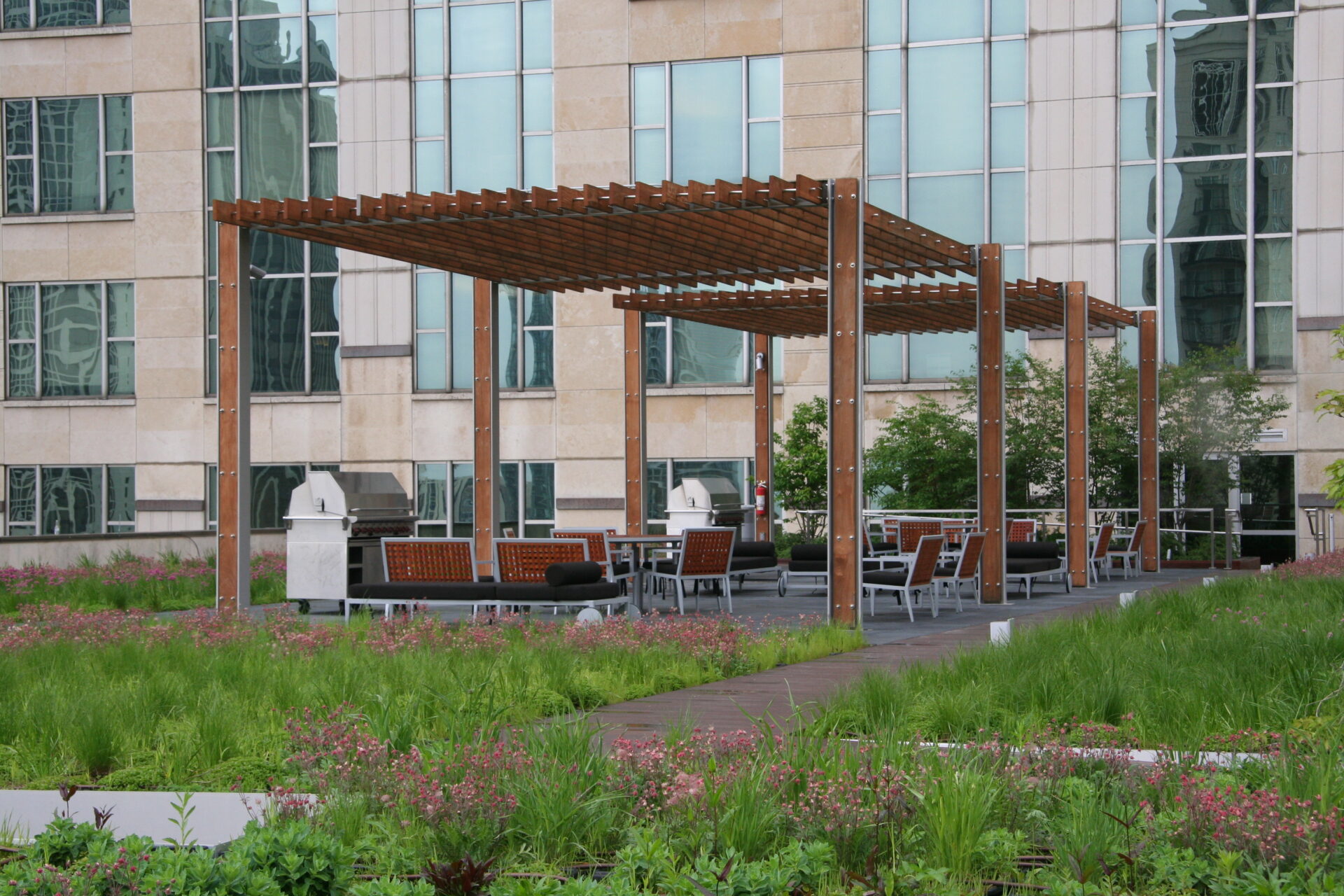
The GreenGrid® system may qualify for innovation and design credits by improving the workplace environment, creating an educational laboratory, or a recreational space. When combined with recycled rubber pavers, decorative edgings, benches, etc., the roof can become a useable space for meetings and relaxation. In addition, green roofs can reduce exterior sound by up to 40%, increasing a building’s acoustic performance which is an element not covered by LEED®. Potential Points: 1 to 2 points
In Summary:
Overall, the GreenGrid® Green Roof system installed on 50% or more of the roof surface virtually guarantees 2 LEED® points and can contribute towards an additional 7+ points towards LEED® certification, almost 25% of the total needed to certify.
For more information on the GreenGrid® green roof system, visit www.GreenGridRoofs.com, send us an email at GreenGridRoofs@WestonSolutions.com, or call us at 847-918-4000.
top
of page  |