


What is a "green roof"?
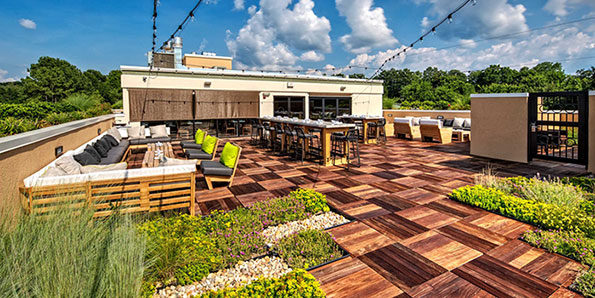
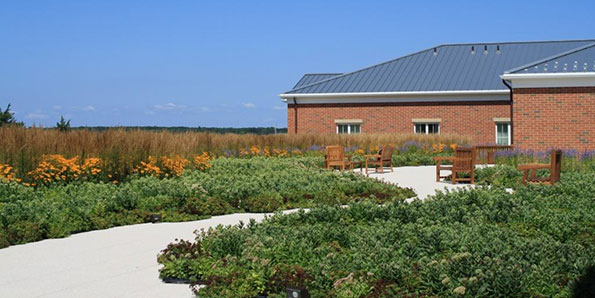
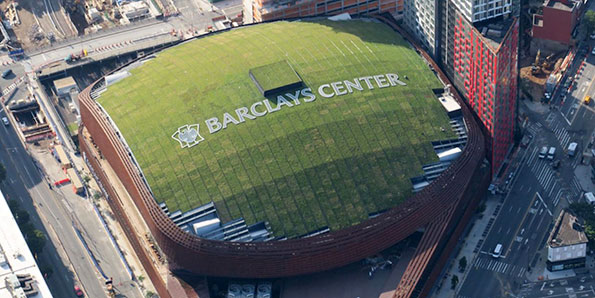
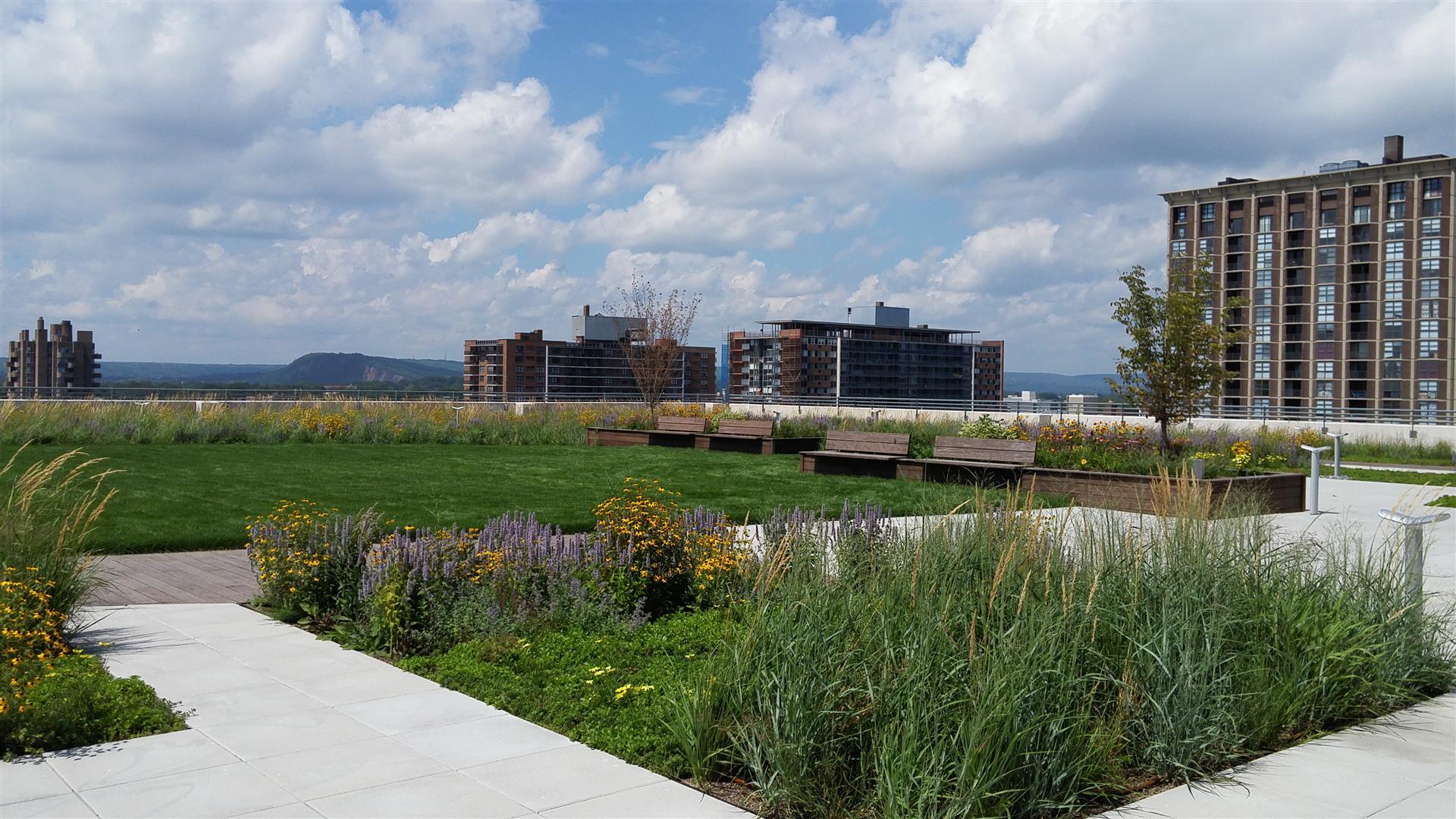
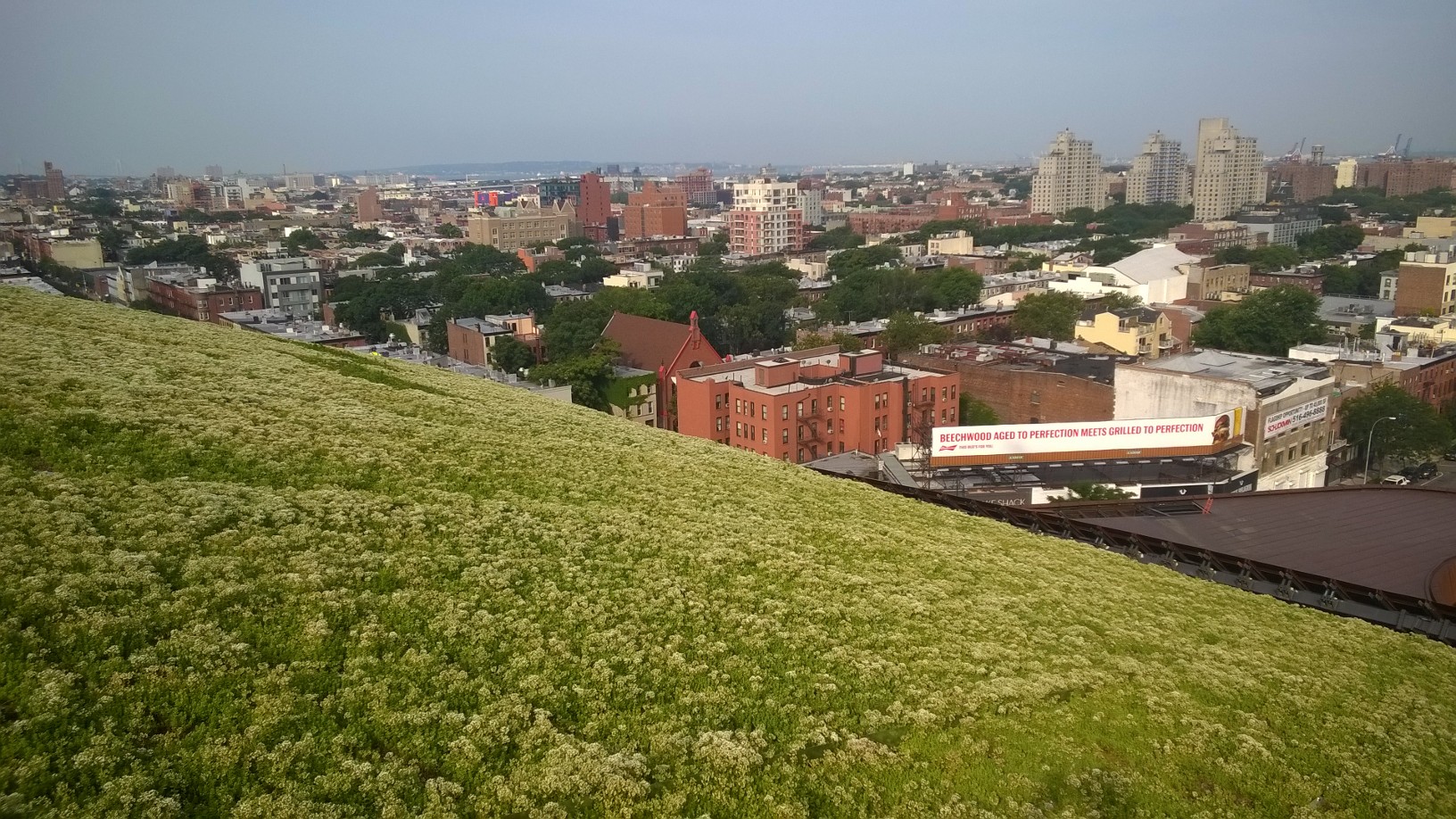
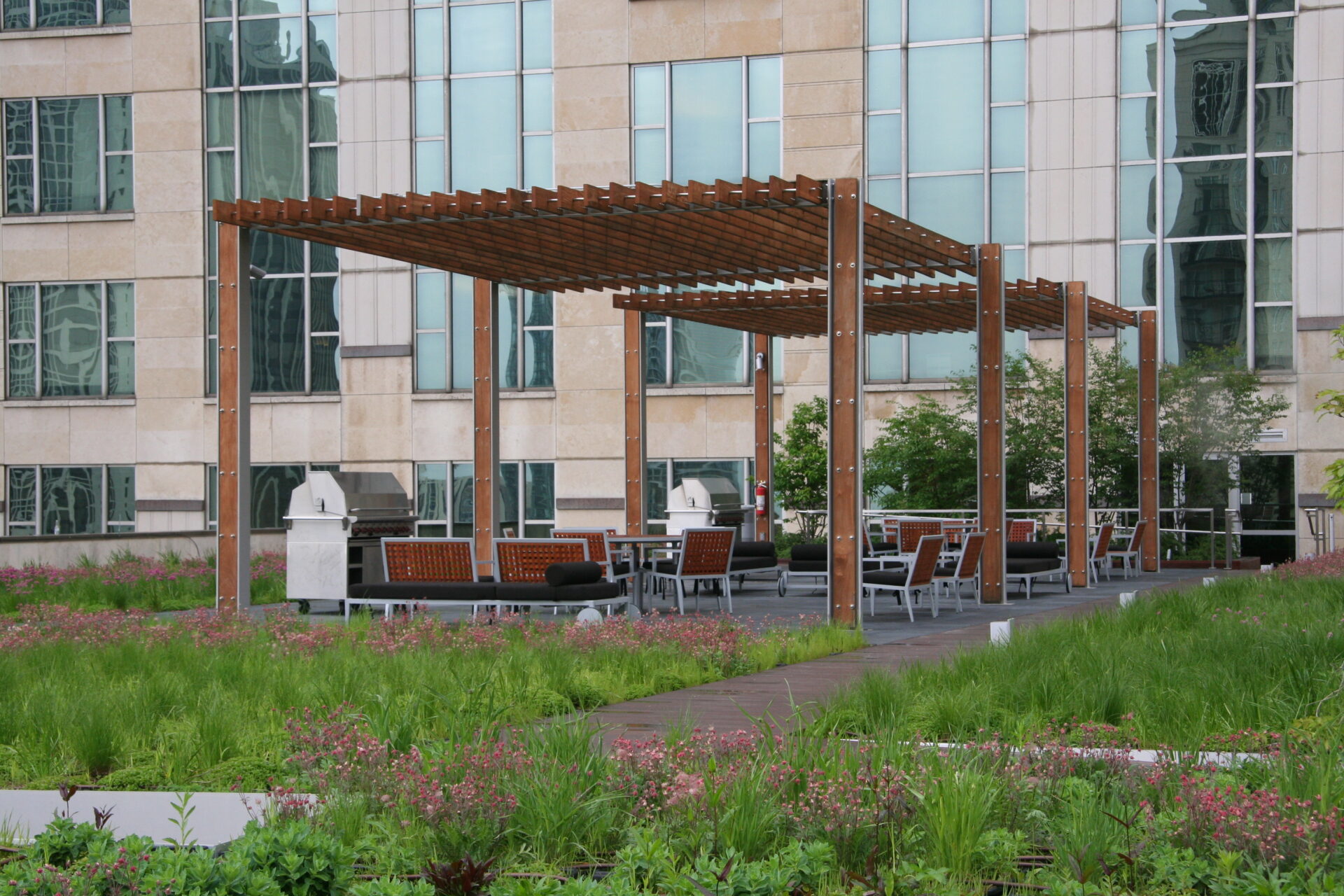
At its most basic, a green roof is a roof substantially covered with vegetation.
Green roofs improve the energy performance of buildings, reduce stormwater
runoff, and contribute to a healthier environment. Already covering over
100 million-ft2 of European rooftops,
green roofs are becoming more and more popular in the U.S.
What is the GreenGrid® system?
The GreenGrid® system is a new green roof technology that offers a flexible, modular design. Simplicity of design and flexibility are the hallmarks of the system. The system is geared toward the needs and requirements of industrial, commercial, and government facilities, offering a sleek, flexible, and cleverly simple design. GreenGrid® modules arrive at your worksite planted and ready for installation. These modules are composed of recycled plastics and can be placed directly on the roofing membrane or on any other surface.
What makes the GreenGrid® system unique?
The GreenGrid® system
is the product of years of research and testing.
Testing of the system’s structural
components and lightweight recycled plastic
materials has been underway since 1997. The
result is a complete green roof solution
that is lightweight, flexible, easy-to-install,
and requires minimal maintenance. Because
it is modular in nature, a GreenGrid® rooftop
design can be easily adjusted and rearranged
after installation to meet a change in stylistic
preferences or planting schemes. Most important,
roof maintenance and repair are easily carried
out with this system. Modules can simply
be moved to address a maintenance issue and
then put back in place.
Who is the GreenGrid® system intended for?
The GreenGrid® system
is ideal for organizations that wish to make
the most of building space and reap the greatest
economic benefits from a high-performance
green roof. The system is compatible with
any low-sloped (non-pitched) roof. It is
suited for industrial, commercial, and government
facilities; large one-story buildings; hotels;
condominiums; and a variety of other structures
to help owners reduce operating costs through
an energy-efficient roofing system.
top of page 
Can the GreenGrid® system be used for non-roof applications?
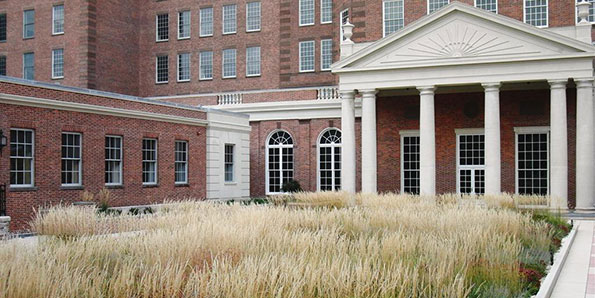
Yes. It has been installed in plazas, median strips, and indoor locations. Again, modules are planted at the nursery then brought to the site and put in place. The interchangeability of the modules allows newly planted modules to be brought to the site to reflect seasons or other desires of the client. The changeout of the modules is efficient and, in instances where perennials are used, out-of-season modules can be stored at the nursery then returned for their "next season." This eliminates the costly purchase of plants every season.
top of page 
How much does the system weigh?
The GreenGrid® system is remarkably lightweight and flexible:
2-inch module - saturated weight = |
11-13 pounds per sq.
ft. (wet) |
4-inch module - saturated weight = |
18-22 pounds per sq.
ft. (wet) |
8-inch module - saturated
weight = |
35+ pounds per sq.
ft. (wet) |
top of page 
What plant selection options are available with the GreenGrid® system?
Plants are one of the most vital components of a green roof. In other green roof systems, plants are set in after the roof system is in place, a very labor-intensive process. With the GreenGrid® system, the modules are preplanted with plants of the color and type selected by clients. The 4-inch depth modules (Extensive systems) will support grasses, sedums and wildflowers, while the 8-inch modules (Intensive) will support a variety of larger ornamental plants. Plants are placed in the modules at the nursery and cared for until they are shipped to the green roof site for installation. A preset "palette" of plants, developed by staff horticulturists, is available to allow customers to select plant varieties according to plant hardiness zone, size, and color.
top of page 
Should the GreenGrid® system be irrigated?
Normal water usage will depend on geographic area, climate, rainfall, plant selection and other factors. Plants can be selected to withstand drought conditions. However, an irrigation system is an available option.
top of page 
What is the urban heat-island effect?
The urban heat island effect occurs in most of the large cities of the world. It has actually been shown to change weather patterns in some cases. Roads and building rooftops absorb a significant amount of heat during the day which, in turn, is radiated back into the atmosphere, causing further warming. Additional heat is given off by vehicles and HVAC systems. These factors can result in a 6 to 10 degree temperature increase within large cities. GreenGrid® green roofs help insulate and shade buildings. The plants on green roofs transpire, thereby cooling the atmosphere around them. These factors have the potential, in large scale, to significantly reduce the heat island effect resulting in lower city temperatures.
top of page 
How will the GreenGrid® system help my building in terms of energy efficiency and insulation?
Due to their superior insulating properties, green roofs have consistently been proven to reduce heating and cooling costs by up to 25% and 50%, respectively, for the floor directly below the roof. Rooftop surface temperatures impact not only the temperatures within the building, but also the amount of energy necessary to heat and cool the building to the desired temperatures. Plants transform heat and soil moisture into humidity, naturally cooling the building. Conversely, in a cool climate, the green roof provides added insulation against heat loss through the building's roof.
top of page 
What can the GreenGrid® system do to help reduce stormwater runoff?
Rainfall on forested and undeveloped land is
almost entirely redistributed through its
natural cycle into the atmosphere, water
bodies, and aquifers. However, in metropolitan
areas, buildings and streets dominate the
landscape, preventing rainwater from following
a natural distribution. In urban areas, a
startling 75% of rainwater can become surface
runoff, often carrying contamination and
pollution. This water flows untreated into
water bodies and open water sources. Green
roofs help alleviate this problem through
absorption and recycling of rainwater. The
GreenGrid® system
can absorb up to 99% of a 1-inch rainfall.
Runoff potential is reduced, lessening the
risk of flooding and sewer overflows. By slowly
percolating through the GreenGrid® growing
media, roof runoff occurs several hours after
peak flows. This provides additional time for
sewer systems to handle other uncontrolled
runoff.
top of page 
What can a green roof system do for sound insulation?
The growing media, plants, and layers of trapped air in a green roof system
serve as excellent sound insulators. Tests have shown that green roofs can
reduce indoor sound by as much as 10 decibels for every 3 inches of growth
media, providing particular benefit to buildings in noise impacted areas,
such as those close to airports or industry.
top of page 
What
is the biggest economic advantage of implementing
the GreenGrid® system?
A recent study by WESTON estimates that greening the rooftops of all buildings
in the City of Chicago would result in nearly $100 million of annual energy savings.
Another tangible payoff from a green roof system is the increased longevity of
the roof membrane. It has been proven that green roofs protect the exterior roof
membrane against ultraviolet radiation, extreme temperature fluctuations, and
puncture or other physical damage. Operating costs for a building can be further
reduced by decreasing the size of its HVAC system and downsizing stormwater retention
facilities.
top of page 
Are there financial incentives available for green roofs?
Yes. A number of cities and municipalities have implemented financial incentives,
including tax incentives, density bonuses, and reduced stormwater requirements.
Check with your municipal planning department to learn more about green roof
incentives in your area.
top of page 
|