



Architect: Terra Architecture
GreenGrid® Size: 6,640 ft2
Installation Contractor: Landgraphics, Inc.
Green Roof Design: Terra Architecture
Rooftop System: Intensive
Status: Completed Spring 2003
Project Narrative: The new Ogden Resource Center (ORC) serves as the state’s instructional resource center for blind and visually impaired children. Its purpose is to distribute learning material to school districts across the state for those students who do not attend the Washington State School for the Blind (WSSB). ORC also houses the Braille Access Center. It produces Braille and large print books as well as other material for WSSB and the community at large. The intent of the project for WSSB was to integrate as many sustainable elements into the new building as possible. The GreenGrid® modular green roof, photovoltaic system, daylighting, on-site stormwater management, and a bioswale planter are among the technologies integrated into the structure. Its sustainable features include:
-
13.5 KW Photovoltaic Array—This photovoltaic solar array is a chemically active response to the sun’s rays. On a sunny summer day, this solar array system can easily produce 80% of its rated output of 13,500 watts (10.8 KW) of electricity, which is greater than the power requirements of the ORC. The ORC is the first state-owned building to implement this system. In addition to the building, the system is supplying a renewable source of electricity to the community through an energy exchange in which WSSB sells Green-Tags (__? KW of electricity) to the Clark County PUD power grid. By selling Green-Tags, WSSB will be able to offset some of its operating expenses.
-
GreenGrid® Modular
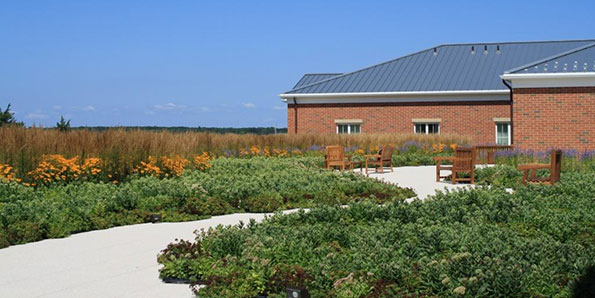
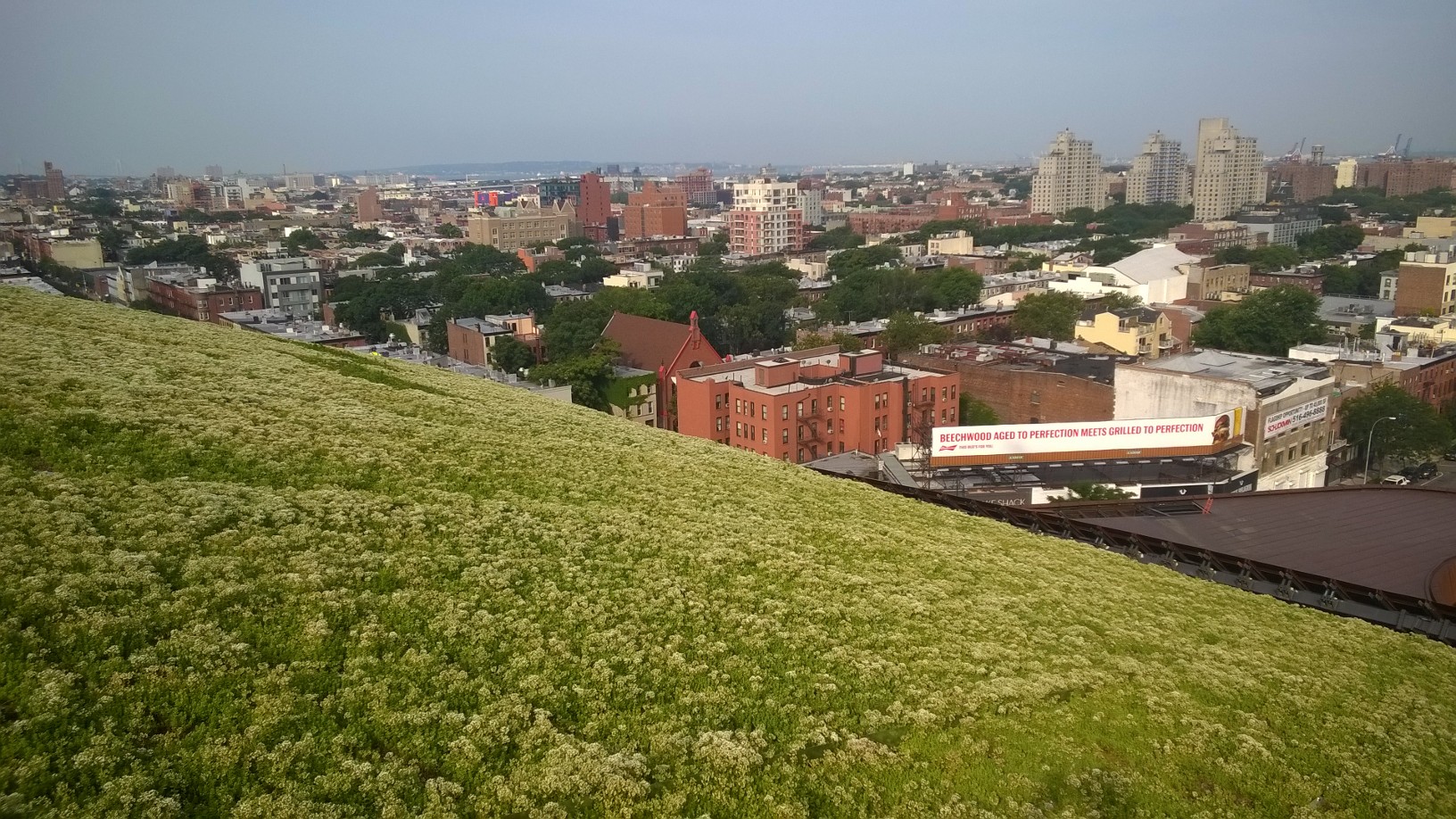
Green Roof—This green roofing system
is the first modular green roof to be installed
in the State of Washington. The 10,000-
ft2 rooftop
was outfitted with 830 Intensive GreenGrid® modules
to cover approximately 6,640-ft2 of
the surface area. The modules were pre-filled
by with the specified GreenGrid® lightweight
growth media and preplanted with drought-tolerant
native coastal strawberries (Fragaria chiloensis).
The green roof was completely installed
in approximately 30 hours. The architect
selected the plant materials for the GreenGrid® based
on the drought tolerance and attractiveness
of the coastal strawberries. Installation
of a green roof was part of a sustainable
design to manage stormwater, decrease heat
loss and heat gain inside the building
envelope, and reduce HVAC energy requirements.
The GreenGrid® system
will also reduce the heat island effect,
improve air quality on-site, and increase
the roof life expectancy. The GreenGrid® system
was the preferred green roofing choice
because of the system’s costs when
compared to traditional green roofs and
versatility, enabling sections of the green
roof to be moved for maintenance or reconfiguration,
and easily be put back in place.
-
On-Site Stormwater Management—All stormwater stays on-site. Excess rainwater that is not absorbed by the green roof is directed to a bioswale planter integrated into the building’s facade. The remaining water is passed to drywells along with the runoff from parking lots. These techniques minimize the on-site stormwater management requirements and costs.
-
Rooftop Light Monitors and Natural Lighting Techniques—Approximately 80% of the building functions on natural light, thereby reducing the need for artificial light and unnecessary energy consumption.
-
Building Aspect—The building has been designed and oriented to work with the sun. The potential heat gain for the building has been reduced with the use of covered walkways along the building’s south and west sides and by locating the majority of the windows on the north side of the building. Roof protrusions serve a dual purpose by orienting the photovoltaic array toward the sun and allowing natural light into the building.
- Earthen Structure—The building is designed to work with the existing topography, thus reducing negative environmental impact through minimizing construction earthwork. The building is also set in the ground 5-ft on the north side, thereby further reducing heating and cooling costs.
Terra Architecture plans to monitor energy expenditures at ORC over the next 3 years in order to assess the impact of the sustainable design features to be able to recommend them to the State of Washington and to future clients based on actual data. |